


Zhejiang Tianlong Capsule Co., Ltd. is a professional manufacturer of hollow capsules. We mainly produce 00#, 00#B, 0#el, 0#, 1#, 2#, 3#, 4# and other specifications of gelatin hollow capsules and plant capsules. At present, the company has two capsule production plants and installed 46 hollow capsule production lines,the current annual production capacity has reached 26 billion capsule.
Why Choose Us
Raw Materials
We offer a vertically integrated supply chain model to ensure reliable long-term supply, complete traceability, and superior quality of raw materials. Our raw materials pass through strict quality control assessments before going to the manufacturing stage.
Complete Qualifications
Our plant area is strictly planned and designed according to the GMP standard for pharmaceutical excipients. We have passed ISO9001, USFDA, HALAL quality management system certification and is registered with the FDA in the United States.
OEM & ODM Service
We can provide hundreds of colors for customers to choose, but also in accordance with the customer's color card number and sample custom production.
Quality Guaranteed
Advanced automated equipment and facilities, strict indoor cleanliness procedures and perfect quality real-time monitoring, as well as high-quality raw materials to ensure that customers can provide quality products at any time.

Main ingredients: Gelatin (collagen in animal skin, bone and white connective tissue, processed by royalty and primary hydrolysis).
Description:Cylindrical, hard, elastic empty capsules, which have a clean, smooth and uniformly colored surface, odorless well trimmed and shaped without deformation. Transparent/ Half Transparent/ Opaque.
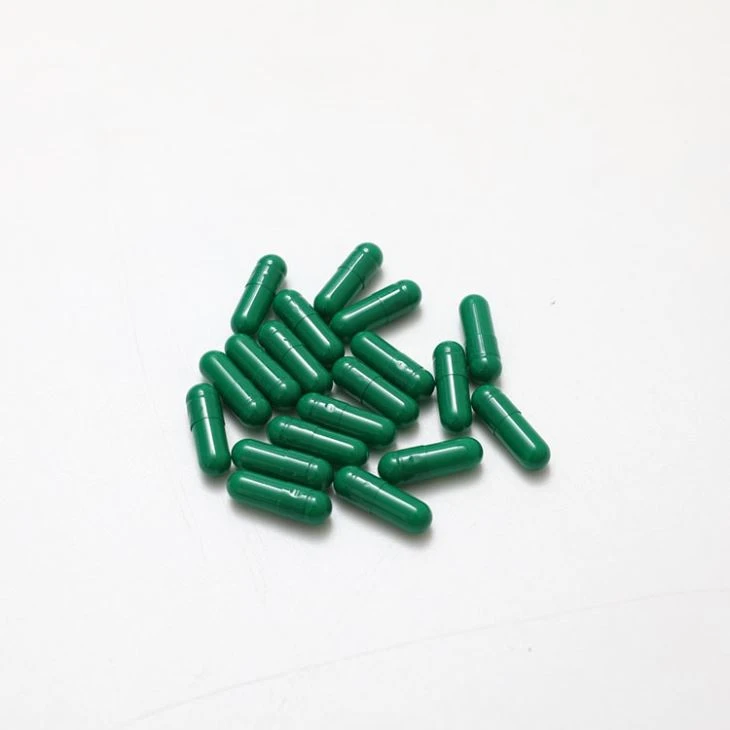
Main ingredients: Gelatin (collagen in animal skin, bone and white connective tissue, processed by royalty and primary hydrolysis).
Description: Cylindrical, hard, elastic empty capsules, which have a clean, smooth and uniformly colored surface, odorless well trimmed and shaped without deformation. Transparent/ Half Transparent/ Opaque.
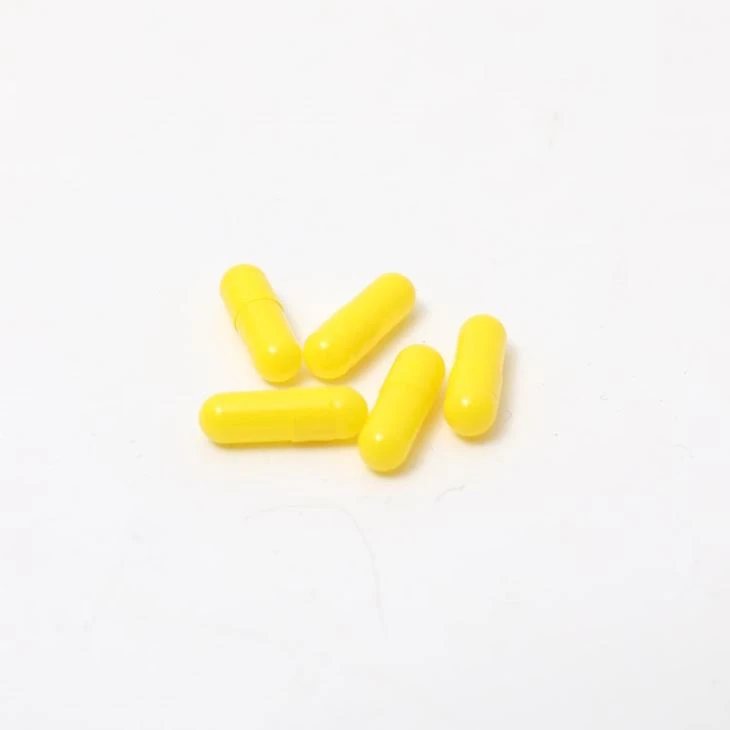
We use high-quality raw materials, raw material suppliers are international and domestic first-class manufacturers that are free from Bovine Spongiform Encephalopathy (BSE) and Transmitting Animal Spongiform Encephalopathy (TSE).

Materials/ gelatin, our company only uses bovine bone gelatin.
Function/ rapid dissolution, can quickly disintegrate in the stomach, is conducive to the rapid release of the contents.
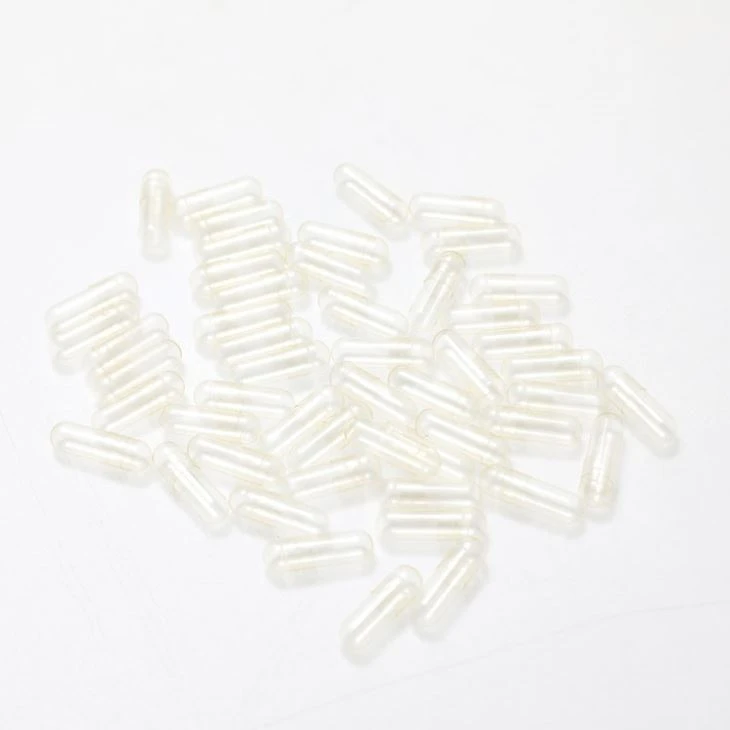
We use high-quality raw materials, raw material suppliers are international and domestic first-class manufacturers. Features of three-lane capsules: not easy to leak powder in the processes of filling and polishing, and the filling precision is high.

We use high-quality raw materials, raw material suppliers are international and domestic first-class manufacturers. Features of three-lane capsules: not easy to leak powder in the processes of filling and polishing, and the filling precision is high.

Culture is the lifeblood of sustainable development of enterprises. Tianlong always emphasis on corporate culture, instill the corporate values and operation philosophy into staffs in order to create a team with high cohesion and great loyalty.

Empty capsules by medical gelatin caps with auxiliary materials refined but become, body two capsule shells. It is mainly used for holding solid drugs. Such as homemade powder, health care products, pharmaceutical, etc.
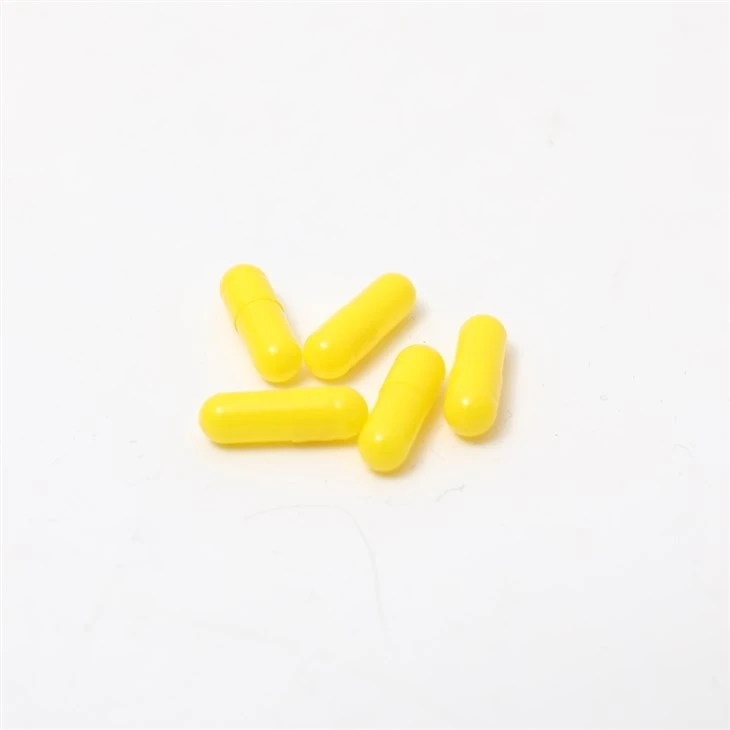
Yellow Bovine Gelatin Capsules
Pharmaceutical gelatin Capsules Size: 00#, 0#el, 0#, 1#, 2#, 3#, 4#, 00#B
Colors: Could be customized according to samples or Pantone cards.
What Is Medicine Capsule
Capsules are important component of day to day health management. But recently an issue came up whether the capsule you are using is of vegetarian or non-vegetarian origin. Capsule shell can be divided into vegetarian and non-vegetarian origin on the basis of their origin. Gelatin capsule shell are typically of animal origin and HPMC or starch based shells are of vegetarian origin.
The Capsule Wall Provides Protection for the Medical Ingredients Inside
Capsules act as a protective barrier for the medicinal ingredients within. Particularly when we are referring to two-piece gel encapsulation-better known as hard capsules-the capsule wall provides significant protection for the ingredients. For example, some medical ingredients are sensitive to light and may degrade when exposed to light. Since the capsule wall can be made opaque, it provides significant protection for light-sensitive ingredients.
The capsule wall can also keep out oxygen and moisture, both of which can increase the rate of degradation of the drug's active ingredients. That means a dosage form like capsulation can provide a barrier against oxygen and moisture, thus increasing the longevity of some drugs. This makes drugs not only more effective for consumers, but also helps manufacturers create more stable and marketable products.
Pharmaceutical Technology College Grads Know that Capsules Are Generally Easy to Make
A pharmaceutical manufacturing diploma can provide you with the training you need to pursue a career in pharmaceutical production and manufacturing.it may interest you to know that capsulation holds a number of benefits in terms of the manufacturing process itself. That's because manufacturing encapsulated drugs is usually much faster and simpler than manufacturing many other dosage forms.
There are a number of reasons for this. For one, capsules tend to require fewer excipients, which are bulk or filler ingredients that are designed to bulk up or bind together a drug's medicinal ingredients. With fewer excipients, capsules can be made faster, cheaper, and more lightweight than tablets or other dosage forms.because most clinical trials use capsules, once these drugs are approved for sale, they can be more easily scaled up from the clinical to the mass market stage.if the manufacturer changed the dosage form from what was used in the clinical trials, then this would lead to regulatory delays and thus slow down the manufacturing process.
Consumers Sometimes Prefer Capsules Over Other Types of Dosage Forms
As you'll learn in your pharmaceutical manufacturing courses, there are many different types of dosage forms, including capsules, tablets, ointments, creams, injectables, and pellets.capsules are one of the more common dosage forms, primarily because they are often preferred by consumers. One survey, found that 52.9% of consumers preferred capsules over other dosage forms. From a consumer's perspective, capsules offer a number of advantages.capsules tend to require fewer excipients, which means they can be made smaller and more lightweight, making them easier to swallow. Consumers especially find soft gel capsules to be easy to swallow.
Capsules can also be individually packaged, which makes them convenient for carrying around. Important information can also be printed on the capsule itself, such as the drug name, brand, and dosage size. For consumers who may be taking multiple medications, this information can help ensure they don't accidentally mix up different medicines.
Hard Gelatin Capsule Manufacturing: Step by Step Process Explained
Gelatin Solution Preparation
Gelatin is dissolved in demineralized water heated to about 60 to 70 degree Celsius to prepare a concentrated
gelatin solution. This highly viscous solution comprises about 30 to 40 percent w/w gelatin. Vacuum is also applied in the solution to curb air bubbles which would otherwise problems during the filling stage and upon storage. Colourants and pigments are also utilized to achieve the final appearance of the capsule. One of the critical aspects to keep in mind is the viscosity of the gelatin solution. It has a direct impact on the downstream manufacturing process and hence it is quite critical.
Dip-coat the gelatin solution on to moulds
Capsule shells are manufactured in an extremely controlled environment. Once the targeted level of viscosity is attained, proceed to the dipping process. The processed gelatin solution is required to be moved to the capsule manufacturing machine at this stage. This can be easily done by using gravity or a pumping mechanism. You have to make sure that the pins on the plate are completely submerged in the solution.
Drying process
Coated pins are made to pass through the furnace for setting and drying purposes. It is important to control the temperature and humidity in the process to successfully remove the moisture from the capsule.
Stripping and trimming process
The pin plate now enters the table section of the machine. Capsules are divided into 2 equal or roughly equal sizes. Later these are stripped off the pins. Once the stripping process comes to an end, shell trimming takes place. The machine automatically joins the two halves for you. These blocks are now moved to the conveyor belt and later on to the container.
Printing
Printing stage involves putting on all crucial information such as dosage instructions, promotion and capsule identification.
Testing
Testing takes place once the printing bit is over. The capsule has to undergo a series of rigorous quality checks to make sure they are of the desired quality and have a good shelf life.
Packaging
The last stage of capsule manufacturing is packaging. Capsules are now packed in conventional manner. Conventional packaging method is used at this stage as it makes the capsule easy to handle.
Store at room temperature. Do not refrigerate or freeze. Store in a dry place. Do not store in a bathroom. Keep all drugs in a safe place. Keep all drugs out of the reach of children and pets.
Throw away unused or expired drugs. Do not flush down a toilet or pour down a drain unless you are told to do so. Check with your pharmacist if you have questions about the best way to throw out drugs. There may be drug take-back programs in your area.

Liquid-Filled Capsules: The Hard and The Soft
Liquid-Filled Hard Gelatin Capsules
A hard gelatin capsule filled with liquid medication is made with two halves - the rim of one half is smaller in diameter than the other, so the other half's larger rim fits over it and seals the capsule. The two capsule halves are manufactured separately, then later filled using different machinery. (They can also be filled by hand when smaller batches are required.)
Liquid-filled hard gelatin capsules are flavorless, odorless, and affordable; softgels have traditionally been the most popular type of capsule for liquid formulations, but two-piece capsules have a number of advantages worth taking note of.
Softgel Capsules
Unlike hard capsules, which are made with two halves, softgel capsules have only one piece. The manufacturing requires a single piece of equipment that fabricates, fills, and hermetically seals each softgel capsule. A rotary die encapsulation machine forms two flat ribbons of capsule shell, then joins them on a twin set of rotating dies. These dies cut the ribbons into a two-dimensional shape and form a seal along the outside. At the same time, a pump fills the capsule through a nozzle in a heated filling wedge.
While hard capsules are cylindrical, softgels can be round, oval, or tubular. Finished softgels need to be dried for a minimum of two days before being packaged and shipped, which is a distinct disadvantage when compared with hard capsules.
What Is The Shell Of A Capsule Pill Made Of
Before we start I would like to convey to you something, most people think that capsules and tablets are the same things. But the answer is no, both are different types of drugs that are taken for medicinal purposes.
The main difference is that a capsule consists of powder or jelly enclosed in a dissolvable plastic container whereas a tablet is a compressed powder in solid form. Tablets can be cut into two, whereas capsules cannot. Tablets are coated with sugar or similar substances, which means the drug contained in them will not immediately enter the bloodstream. But, the drug in the capsule is known to enter the bloodstream immediately.
Now let's come to the point, actually, the material wrapped around a capsule is not plastic but a polymer. Plastic is a specific form of polymer comprised of a long chain of polymers.
When we swallow a capsule it melts when it gets in contact with water. So obviously, it melts when it enters our body. The capsules are designed to melt in a specific area of our digestive part, so depending on how the medicine is meant to work it gets melted and drug inside it will be released in the desired area.
You may have seen that the capsules and tablets come in different sizes, those sizes indicate the purpose of use and area of release. So the conclusion is that nothing will happen to us when we swallow a capsule.
I hope you got your answer and kindly keep learning with focus, there is a lot of science involved in whatever we do in our daily routine.
Although the capsule solves the problem of premature dissolution of the medicine in the mouth, how to solve the problem that it dissolves too quickly in the stomach.
Enteric-coated capsules often use methacrylic acid copolymer and methacrylate copolymer, commonly known as acrylic resin. This resin is like a timing "alarm clock" installed on the capsule. It can control the release time and position of the active ingredients, so that the capsule will not melt until exposed to an alkaline environment, so the acid in the stomach can't dissolve the capsule, and the drug will not work until the intestine.
Successfully reaching the targeted organs is only the first step. To make the medicine in the capsule last effective, it depends on the small pills in the capsule. These small pills all have the same core that contains the drug, and they look the same, but in fact they are not exactly the same. The difference lies in the "clothes" worn outside their core. The composition of this layer of clothing is usually some organic matter with very large molecules, evenly wrapped around the core of the pellets. After the capsule is dissolved, this layer of "clothing" will slowly dissolve in the digestive tract until it disappears completely, exposing the core part. The pill will release the drug only after the core part is exposed.
If the "clothing" is made thicker, it will take more time to dissolve and the release of the drug will be delayed. If the thickness of the "clothes" is properly controlled, the medicine in the pill can be released when needed.
Thick coating layer can delay the release time of the drug, but it cannot increase the time for the drug to take effect. Even if it is possible to let the medicine take effect after 12 hours, it cannot make the effect last 12 hours. In order to solve this problem, people usually divide the small pills in sustained-release capsules into several groups and let them wear clothes of different thicknesses.
Suppose these small pills are divided into three groups. The first group is a quick-release pill without coating, the drug in this group of pill can be released immediately. The second group is a small medium-release pill, which is wrapped with a thinner coating, and the drug release rate is slower. The third group is slow-release small pills, with the thickest coating layer and the slowest release of drugs.
Pack these three groups of small pills into capsules. When the capsule is swallowed, the capsule shell first dissolves in the digestive tract, and then the quick-release pill starts to release the drug. The released drug is absorbed into the body by the gastrointestinal tract, and the drug concentration in the body gradually rises. After a while, the concentration of the drug in the body will be sufficient to produce a drug effect. At the same time, the drugs entering the body will also be metabolized and gradually excreted from the body, so the concentration of the drug starts to gradually decrease after rising. At this time, the coating layer of the medium-release pill just dissolves almost, and it also joins the ranks of drug release. When the drug concentration provided by the medium-release pill began to drop again, the slow-release pill took its place again.
After the cooperation of the three groups, the drug concentration can be maintained at a stable level for a relatively long time. In this way, sustained-release capsules remain effective for a long time.
In addition to sustained-release capsules, there are many technologies that can control the rate and time of drug release. The application of these technologies not only makes the use of drugs more convenient, but also makes the treatment effect more stable.
Our Certificates
We always feel that all success of our company is directly related to the quality of the products we offer. They meet the highest quality requirements as stipulated in ISO9001, USFDA, HALAL and our stringent quality control system.

Automatic Production Plant
The plant area is strictly planned and designed according to the GMP standard for pharmaceutical excipients.

FAQ
Hot Tags: medicine capsule, China medicine capsule manufacturers, suppliers, factory, size 0 gelatin capsule, kosher gelatin capsule, industrial gelatin capsule, domestic gelatin capsule, gelatin capsules for nutmeg extracts, gelatin capsules for watermelons extracts


