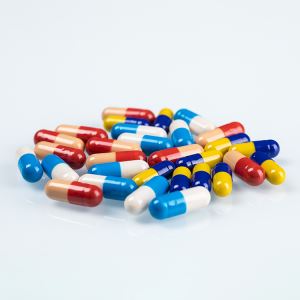

Zhejiang Tianlong Capsule Co., Ltd. was founded in 1987 and is a professional manufacturer of hollow capsules. At present, the company has two capsule production plants and 46 hollow capsule production lines installed. The plant area is strictly planned and designed according to the GMP standard for pharmaceutical excipients. The layout is scientific and reasonable. It has passed ISO9001 quality management system certification and is registered with the FDA in the United States.
Why Choose Us
Our Product
Gelatin Empty Hard Capsules:Gelatin empty hard capsules are the most widely used all around the world at present.
HPMC Empty Hard Capsules: Low water content, suitable for water sensitive components.No risk of cross-linking reaction.The structure of elastic polymer ensures the stability of the capsule and the high filling rate.
Pullulan Empty Hard Capsules:Pullulan capsules used pullulan polysaccharides (fermented from corn) as main raw material, produced by special dipping and drying process.
Our Certificate
We always feel that all success of our company is directly related to the quality of the products we offer. They meet the highest quality requirements as stipulated in ISO9001, USFDA, HALAL and our stringent quality control system.
Main Market
Products are also exported to Europe, the Americas, Africa, Central Asia, the Middle East and many other countries and regions. Has won wide recognition in the global pharmaceutical and health industry.
Our Service
Corrective actions by responding quickly to any quality request or issue and collaborating in trouble-shooting on your capsule-filling line.
Preventive actions by being on hand to advise and anticipating any changing situations in production requirements. Additionally, on your demand, we can organize training activities for operators, or whom you decide, in capsule-filling production areas.

The raw material of our gelatin capsules is sourced from Dongbao and Rousselot, the largest suppliers of high quality bovine bone gel. The process of manufacturing gelatin capsules and operation is in accordance with GMP standards.

Empty capsules by medical gelatin caps with auxiliary materials refined but become, body two capsule shells. It is mainly used for holding solid drugs.Such as homemade powder, health care products, pharmaceutical, etc.

Empty capsules by medical gelatin caps with auxiliary materials refined but become, body two capsule shells. It is mainly used for holding solid drugs. Such as homemade powder, health care products, pharmaceutical, etc.

Materials/ gelatin, our company only uses bovine bone gelatin.
Function/ rapid dissolution, can quickly disintegrate in the stomach, is conducive to the rapid release of the contents.

Empty (Vacant) capsule is one of the most common choices for medicine filling, and it has acquired an important position in the industry of medicine manufacture.

Every day more and more people are learning about the benefits of gelatin capsules and naturally it begs the question, just how are gelatin capsules made? The quick answer is that they're made with natural ingredients, using time-tested and safe methods.

Tianlong is handled by well-experience team of technical and professional staff to committed to provide the Domestic and International Pharmaceutical industries with capsules suited for all type of filling machines.

Empty capsules by medical gelatin caps with auxiliary materials refined but become, body two capsule shells. It is mainly used for holding solid drugs. Such as homemade powder, health care products, pharmaceutical, etc.

Culture is the lifeblood of sustainable development of enterprises. Tianlong always emphasis on corporate culture, instill the corporate values and operation philosophy into staffs in order to create a team with high cohesion and great loyalty.
What Is Empty Capsule
Empty capsules are made of two distinct parts, a body and a cap. The body is first filled with a mix of active ingredients and excipients and subsequently closed with a cap, using a manual or an automatic press machine. Depending on the raw materials or ingredients used for making these capsule shells, empty capsules can be classified into two types: (1) hard gelatin or (2) hydroxypropyl methylcellulose (HPMC) capsules. Empty capsules, both gelatin and vegetable capsules (HPMC), are available in a variety of sizes.
Advantages of Empty Capsule
Ease of swallowing
Hard, empty tablets have the benefit of being easy to swallow. Choosing the right capsule is important for the safety and effectiveness of the patient. Patients with trouble swallowing will appreciate how easy it is to take these capsules thanks to their glossy coating.
Masking unpleasant tastes and odors
A drug's unpleasant flavor or odor might discourage some people from using it. In this scenario, empty, hard capsules are ideal. The drug delivery system recommends microcapsules for precise requirements. Enclosing medications can lessen their possibly unpleasant side effects and benefit more people.
Extended shelf life
The increased durability of empty hard capsules allows for considerably longer storage of their contents. These are easily digestible because of gelatin formation, allowing efficient absorption. The capsule's contents block air, light, and moisture from reaching them. It is important if you want to store medicines for a long period.
Suitable for a wide range of products
Empty capsules are very versatile and rigid, so that people can fill them with powders, grains, or liquids. They are versatile for myriads of substances like dietary supplements, probiotics, and herbal extracts. Their adaptability in drug delivery makes them a great replacement for conventional pharmaceutical formulations.
Empty Capsules - Main Materials
Gelatin
Gelatin is an animal-based material derived from partial acid, alkaline, or enzymatic hydrolysis of collagen found in animal skin, bones, tendons, and ligaments, or a mixture of these different types of gelatin. Gelatin does not exist freely in nature and cannot be extracted from the non-collagenous parts of vertebrates such as horns or hooves. Gelatin has no plant sources and no chemical relationship with other materials known as vegetable gels (such as seaweed extracts). Extracted from collagen, it contains a significant amount of cyclic amino acids, proline, and hydroxyproline. Collagen consists of three intertwined helical polypeptide chains connected by intermolecular cross-links.
Gelatin, CAS Reg. No. 9000-70-8, is recognized by the U.S. Food and Drug Administration (FDA) as Generally Recognized as Safe (GRAS) and is listed in the 2023 edition of the United States Pharmacopeia.
Gelatin has widespread applications in the pharmaceutical and food industries as a film-forming agent, gelling agent, suspending agent, adhesive, and thickener. Gelatin-based empty capsules are extensively used in pharmaceuticals and health food capsules due to their clear advantages.
Gelatin empty capsules need attention during storage due to their high moisture absorbency, which poses a risk of the capsules becoming brittle.
Due to the structural components of gelatin, during long-term storage of the capsules, gelatin can undergo cross-linking reactions with aldehydes formed by oxidation or present in the contents, leading to delayed gelatin dissolution and slower formulation release.
Hydroxypropyl Methylcellulose (HPMC)
Hydroxypropyl methylcellulose is a plant-based semi-synthetic product made by partially methylating and hydroxypropylating cellulose. Its production involves treating cotton linter or wood pulp cellulose with caustic soda, followed by sequential etherification with chloromethane and epichlorohydrin, and then refining and milling the product.
Hydroxypropyl methylcellulose, CAS Reg. No. 9004-65-3, is recognized by the FDA as GRAS and is listed in the 2023 edition of the United States Pharmacopeia.
Hydroxypropyl methylcellulose has broad applications in the pharmaceutical and food industries as an adhesive, coating agent, controlled-release agent, dispersant, emulsifier, film-former, foaming agent, granulating aid, release enhancer, solvent, suspending agent, sustained-release agent, and thickener. In the market, empty capsules made from hydroxypropyl methylcellulose are generally known as vegetable capsules.
Hydroxypropyl methylcellulose empty capsules have better compatibility and stability with low-moisture, hygroscopic contents and do not exhibit cross-linking reactions like gelatin. However, further improvements are needed in the appearance and mechanical strength of the products.
Hydroxypropyl Starch
Hydroxypropyl starch is a plant-based semi-synthetic product made by chemically hydroxypropylating modified starch. Its preparation method involves starch undergoing etherification reactions with epichlorohydrin under alkaline conditions, followed by refining and milling.
Hydroxypropyl starch, CAS Reg. No. 9049-76-7, is recognized by the FDA as GRAS .
Hydroxypropyl starch has broad applications in the pharmaceutical and food industries as a binder, disintegrant, emulsifier, thickener, and viscosity enhancer. Currently, starch capsules are marketed.
Hydroxypropyl starch empty capsules are rarely used in the current market, and their safety, functionality, and stability need further evaluation.
Capsule Size Chart


Important to understand what information it gives so you can make the right decisions for your formulas. The following are the main components often included in a capsule size chart:
Capsule Sizes: In this case, 000 (the biggest) to 5 (the smallest) are provided as the possible capsule sizes. Each of these sizes has different capacities and dimensions and thus it is vital to select an appropriate one depending on what you need.
Weight Capacity: This refers to how many milligrams (mg) of material a capsule can hold. The density of formulation affects its capacity whereby, for instance, size 00 capsules may have around 735 mg of material but this may vary according to materials' densities; as opposed to that, size 4 contains only about 120 mg.
Volume Capacity: It represents the total internal volume measured in milliliters (ml). One needs to know this in order understand how much space their formula will occupy within the capsule preventing spillage.
Empty Capsule Weight: Also shown on the chart is the weight of an empty capsule which is very important in formulation accuracy. By knowing an empty capsule weight, it is possible to determine how much active ingredient should be used with respect to required dosage without going beyond its capacity limit
Overall Closed Length: This is the total length of the capsule when it is fully assembled, measured in millimeters (mm). This measurement is important for ensuring that the capsule fits into packaging or equipment used during production.
Individual Lengths: The chart details the lengths of both the body and cap of the capsule. The body is the longer part that holds the material, while the cap is shorter and used to seal the capsule. These measurements are usually provided in both millimeters and inches.
External Diameter: This measurement refers to the diameter of the capsule, including both the body and the cap. It's essential for ensuring that the capsule will fit into the intended delivery system, such as a blister pack or bottle.
Tolerance: The chart may also include tolerance levels, which indicate the allowable variance in dimensions. Understanding tolerance is important for maintaining quality control, ensuring that the capsules meet the required specifications without being considered flawed or unfit for sale.
By carefully reading and understanding each element in the capsule size chart, you can make informed decisions that ensure the accuracy, consistency, and quality of your product.
Raw material
In the capsule manufacturing process, you should use high-quality raw materials-a few examples to meet the highest standards, including usp-nf, jp, and ep.
Colorant
You can decide what type of capsule you want, colored or opaque. Colorants are generally used in the melting phase to give color to the pills.
Capsule manufacturing process
The first part of the capsule manufacturing process involves melting the raw material. Moreover, the coloration is also done for easy distinguishability. Let's check out the appropriate details and steps to make capsules:
- Raw material melting & coloration
- The raw material that meets the acceptance test requirements is brought into the manufacturing area.
- Raw material contained in the hopper is automatically weighed in the container.
- Now, the weighted material will be shifted from the container to the melting tank.
- Purified water is added to the melting tank before finally starting the melting process.
- After initiating the melting, the mixture gets stirred to create a uniform jelly.
- In this step, the colorant can be added to the colored capsules.
Capsule molding & cutting
- In the capsule production room, the capsule manufacturing machines receive the colored jelly.
- The pins are then dipped into the jelly mixture. Molding pins are then shifted to the drying unit.
- The drying process will be at a constant temperature and humidity. After the drying process, these are sent to the next section.
- Now, the dried caps and bodies are removed from the molding pins.
- The caps and bodies will be trimmed to an appropriate length and then pre-locked.
- Next, an immediate visual inspection of all the capsules will be done. The light is flashed on the rotating capsules, and the digital images are captured with cameras. Besides, image processing technology is used to detect abnormal shapes.
- In the last step, the conformed capsules will be packed into the containers.
Printing, inspection & packaging
- Now, the printing of the capsules started for the product identification purpose.
- The specified design is printed in the capsules by utilizing the ink and printing machine of the company.
- An alternate option can also be used for printing without ink. In this part, you can use the laser printing machine.
Automatic capsule inspection machine
The operation of the machine is simple, and it is easy for staff to learn and operate. The machine can test specifications for 00#, 0#, 1#, 2#, 3#, and 4# capsules, and it can detect defects such as less filling, holes, internal chips, cracks, notches, short bodies, double hats, concave tops, thin spots, short and long hats, bubbles, black spots/heterochromatic spots, and others.
- Now, the capsules will be inspected using the capsule inspection machine.
- Counting of the capsules will be done.
- The conformed capsules will be shifted to the next container.
- Packaged capsules are stored in the product warehouse with controlled temperature and humidity.
How Long Does It Take for a Capsule to Dissolve
When it comes to capsule breakdown, we're actually talking about drug release. The time it takes for a capsule to dissolve can vary depending on the type of capsule. There are three main types of capsules classified based on their dissolution rate.
Immediate-Release Capsules
Immediate-release capsules are meant to be swallowed & dissolve in your stomach quickly. These capsules - generally - dissolve within 30 to 60 minutes. These rapid dissolving times enable the active ingredients to be highly bioavailable. This means that the capsule enters the bloodstream without first passing through the liver for a rapid onset of relief or action.
Delayed-Release (Enteric-Coated) Capsules
Enteric-coated capsules, or delayed-release capsules, have been designed to survive the stomach's harsh high-acid environment. Here, enteric capsules will dissolve in the small intestine with a higher pH. This design is used to prevent sensitive ingredients from being broken down in the stomach acid. It ensures they end up in the area of the small intestine where they can have an effect. Enteric-coated capsules typically take 1 or 2 hours to dissolve after reaching the small intestine.
Extended-Release (Sustained-Release) Capsules
Extended-release capsules are prepared so that they release the dosage over a long time. These capsules allow you not to take your supplement or medication 2-3 times a day. As a result, extended-release capsules may take 4 to 12 hours to be completely dissolved in the body and release the active ingredient.
Are Capsules Stronger Than Pills
Medicine in terms of capsule and pills possess unique characteristics as well as specifications. Pills have hard coatings. However, capsules have the other end as a polymeric shell. Medicines should be very much understood, since they are taken in different ways and move about in the body in order to cure illnesses. Selection of capsules and pills will be greatly influenced by factors like bioavailability, absorption rate, and general effectiveness. This underscores the relevance of right choices. Are capsules stronger than pills.
Pills and capsules
Pills
Oral medication commonly exists as pills, alternatively referred to as tablets. Active pharmaceutical ingredients (apis), in combination with diverse excipients, usually form a solid and compressed structure - often coated for primary purposes: Facilitating ease of swallowing; masking the taste of the medication. Various shapes and sizes characterize pills, their intended divisibility into smaller doses determines whether they bear scoring or not.
Capsules
A shell encapsulates a medicine; this outer layer subsequently disintegrates within the digestive system. Consequently, like a pill, it undergoes absorption into the bloodstream and further decomposition occurs.
Two main types exist: Hard-shell capsules and soft gel capsules. The hard-shelled capsule comprises two fitting parts that form a closed shell; it contains either dry or wet medicine. Usually larger and featuring partially clear interior, soft-gel capsules encapsulate medicine in liquid gel form.
Difference between pills and capsules
- Pills usually take more time to dissolve than capsules due to their solid and compact form.
- Pills have delayed action due to slower absorption rate as compared to capsules.
- Capsules are more likely to be of higher cost as compared to pills.
- Gel-coated capsules are generally easy to swallow as compared to pills.
Which is stronger-capsules or pills?
The rate of capsule disintegration generally exceeds that of the pills separately. The gelatinous polymeric shell capsules disintegrate easily, making the drug easier to absorb. This rapid dispersion May contribute to faster onset of action and increased bioavailability compared to pills. As the pill solidifies, it generally decomposes more slowly, making it more likely to leach.
FAQ
Hot Tags: empty capsule, China empty capsule manufacturers, suppliers, factory, gelatin capsules for cosmetic supplements, custom gelatin capsule, gelatin capsules for coffee extracts, gelatin capsules for children s health supplements, Fillable Gel Capsule, gelatin capsules for manganese supplements