


Zhejiang Tianlong Capsule Co., Ltd. is a professional manufacturer of hollow capsules. We mainly produce 00#, 00#B, 0#el, 0#, 1#, 2#, 3#, 4# and other specifications of gelatin hollow capsules and plant capsules. At present, the company has two capsule production plants and installed 46 hollow capsule production lines,the current annual production capacity has reached 26 billion capsule.
Why Choose Us
Raw Materials
We offer a vertically integrated supply chain model to ensure reliable long-term supply, complete traceability, and superior quality of raw materials. Our raw materials pass through strict quality control assessments before going to the manufacturing stage.
Complete Qualifications
Our plant area is strictly planned and designed according to the GMP standard for pharmaceutical excipients. We have passed ISO9001, USFDA, HALAL quality management system certification and is registered with the FDA in the United States.
OEM & ODM Service
We can provide hundreds of colors for customers to choose, but also in accordance with the customer's color card number and sample custom production.
Quality Guaranteed
Advanced automated equipment and facilities, strict indoor cleanliness procedures and perfect quality real-time monitoring, as well as high-quality raw materials to ensure that customers can provide quality products at any time.
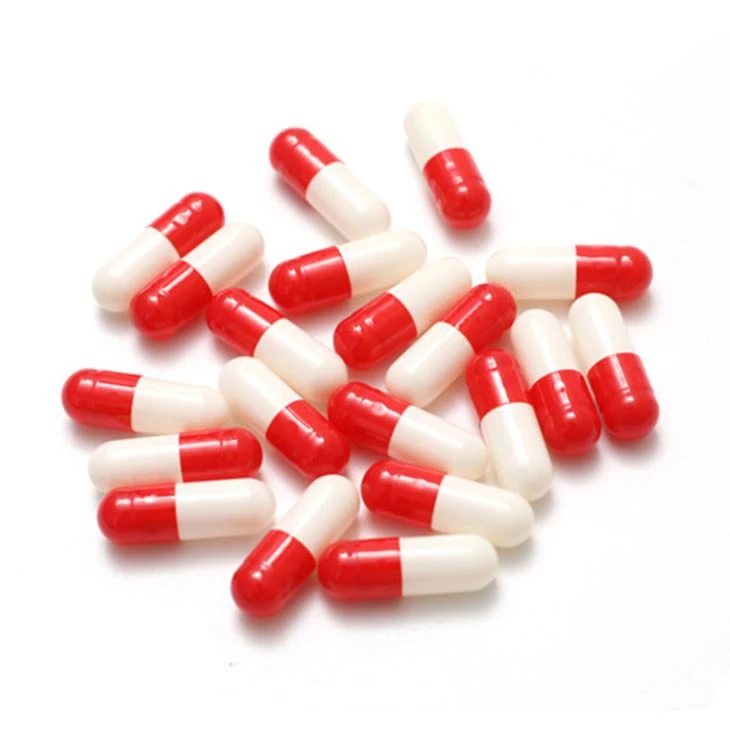
Zhejiang Tianlong Capsule Co., Ltd. was founded in 1987 and is a professional manufacturer of hollow capsules. At present, the company has two capsule production plants and 46 hollow capsule production lines installed.

Material: Pharmaceutical grade geltain
The capsule will be dissolved quickly, reliable and safe.
Certifications: USFDA HALAL ISO9001

Material: Gelatin
Application: Medical
Logo Printing: Customized Printing
Flexibility: Hard
Specification: Size#0~#4

Material: Gelatin
Application: Medical
Logo Printing: Customized Printing
Flexibility: Hard
Specification: Size#0~#4

The raw material of our gelatin capsules is sourced from Dongbao and Rousselot, the largest suppliers of high quality bovine bone gel. The process of manufacturing gelatin capsules and operation is in accordance with GMP standards.

The raw material of our gelatin capsules is sourced from Dongbao and Rousselot, the largest suppliers of high quality bovine bone gel. The process of manufacturing gelatin capsules and operation is in accordance with GMP standards.

The raw material of our gelatin capsules is sourced from Dongbao and Rousselot, the largest suppliers of high quality bovine bone gel. The process of manufacturing gelatin capsules and operation is in accordance with GMP standards.

The raw material of our gelatin capsules is sourced from Dongbao and Rousselot, the largest suppliers of high quality bovine bone gel. The process of manufacturing gelatin capsules and operation is in accordance with GMP standards.

Empty capsules by medical gelatin caps with auxiliary materials refined but become, body two capsule shells. It is mainly used for holding solid drugs.Such as homemade powder, health care products, pharmaceutical, etc.
What Is Gelatine Capsule
Capsule, a form of dosage form in medication, are common in our day-to-day health management. Capsules are made up of gelatin (hard or soft) and nongelatin shells generally derived from hydrolysis of collagen (acid, alkaline, enzymatic, or thermal hydrolysis) from animal origin or cellulose based.
1. Soft gelatin capsules are a patient-friendly dosage form for administering nonpalatable and/or oily liquids orally.
2. Unpleasant odors or tastes can be easily ingested in a soft gelatin capsule dosage form, which provides a neat appearance and convenient ingestion.
3. Appropriate vehicle selection may promote rapid dispersion of capsule contents and drug dissolution.
4. Because the liquid fill is metered into individual capsules via a positive displacement pump, a higher degree of reproducibility is achieved during the manufacture of soft gelatin capsules than is possible with powders or granules fed in the manufacture of tablets or hard gelatin capsules.
5. Soft gelatin capsules are especially useful for lipid-soluble low-dose drugs because they allow for greater content uniformity between dosage units than the traditional tablet dosage form.
6. It may also be preferable to tablet dosage forms for encapsulating liquid, water-insoluble drugs.
7. The capsules can be made to be immediate-release (IR), slow-release (SR), or enteric-coated.
8. As a natural byproduct of the manufacturing process, soft gelatin capsules are hermetically sealed. As a result, this dosage form is ideal for liquids and volatile drugs. Many drugs that are susceptible to atmospheric oxidation can also be successfully formulated in this dosage form.
Types of Capsules
Hard Gelatin Capsule
It is a type of capsule composed of gelatin of grade (9000-70-8) and purified water. A protein product named gelatin was found to be a major component of gelatin hard capsules because of its harmless nature.
For the transparent capsule, the percentage of gelatin and water in its composition is found to be 85% and 15% respectively.
While the percentage of gelatin and water in the opaque capsule is found to be 84% and 15% respectively, along with the percentage of titanium dioxide at 0.5-1.8% and colourants is 0.2-0.5%.
Titanium dioxide acted as the opacifier and colourant, which makes the capsule colourful. This type of capsule in pharmacy is found to be inexpensive, edible, and degradable.
These types of a capsule with examples are given as Cinobac, Didanosine Methylphenidate and dextroamphetamine.
Soft Gelatin Capsule
This is a type of capsule which is approximately similar to the hard gelatin capsule in composition despite the moisture content in the capsule.
Plasticizers are also involved in their composition to enhance stability and elasticity. The composition of the soft gelatin capsule involved glycerol (56-81-5), Sorbitol (50-70-4), etc.
This type of capsule in pharmacies is a single-piece capsule via a specialised machine and the capsule is filled with the liquid.
This type of capsule with examples is given as Calcitriol.
HPMC Capsule
HPMC capsule is abbreviated as Hydroxypropyl methyl Cellulose of grade (9002-65-3). This type of capsule is composed of HPMC and purified water, in which HPMC was obtained from the hydrolysis of the plant via Etherification.
As the HPMC originated from the plants, hence this medicine was certified as a vegetarian capsule.
An example of this capsule is Pradaxa.
Pullulan Capsule
The main components of the pullulan capsule are pullulan and water which was purified.
In this composition, Pullulan (9057-02-7) is present and a water-soluble mucopolysaccharide is present.
This biological component is found to be a better option for the ideal raw material for the production of the capsule because of its brilliant formation of the film.
This type of capsule has extremely low moisture content with good toughness. This type of capsule is filled with sensitive water medication.
Enteric-coated Capsule
The enteric-coated capsule is a special type of capsule medicine which was made by the application of the enteric coating to the common type of capsule
Just because of the use of raw material, it creates a new category of capsule termed enteric-coated capsule. These types of capsules are used to release the medication into the intestine
The general principle on which the capsule works was that it can be dissolved with the help of the alkaline liquid inside the intestinal tract
The material which is used for the enteric coating of the capsule was fatty acids, plastics, waxes, shellac, plant fibres, etc. Among them, the consumption of these materials are harmful for human beings as they contain phthalates
Therefore, the amount of these materials gets restricted by the legal regulatory authorities
Allowing accurate and convenient unit dosing of drugs, vitamins, and nutraceuticals.
Capsules help to mask the unpleasant taste and smell of drugs, ease swallowing, and deliver by mouth drugs that are not formulable as tablets.
They help enhance medication acceptance, identification, and adherence for the patient and, thus, improve therapeutic outcomes.
Manufacturers have higher branding flexibility with gelatin capsules through shape and color variation, which helps promote brand identity and recognition.
Capsule aids modern drug delivery, capable of housing beads, mini-tablets, and even mini-capsules.
In clinical studies, gelatin capsules are often used to present test drugs for administration to volunteers.
Capsules enable individuals to develop personal supplement formulas at home to meet specific needs.
Some key considerations of hard and soft gelatin capsules
Active Pharmaceutical Ingredient (API) / Dissolution
This is the rate at which the capsule dissolves in the stomach allowing the active ingredient to be absorbed by the body. Gelatin, for example, has one of the best - if not the best - API dissolution rates, enabling the API to be quickly available for absorption by the body. It's one of the most important considerations for pharmaceutical manufacturers.
Usually the dissolution process occurs smoothly in the body. However, exposure to inappropriate heat or humidity conditions, or the presence of certain aldehydes, can cause capsule shells to cross-link. Because of its low humidity, HPMC is not subject to the problems of crosslinks. Gelatin used to be susceptible to this phenomenon but a new generation of gelatins have been developed to significantly decrease and slow down possible cross-linking issues.
Cost-efficiency
Compared to alternative excipients, gelatin is the most cost-efficient. The ingredients for first generation HPMC hard capsules cost around four times more than gelatin and HPMC capsules cost around three times more to manufacture. This of course has an impact on the costs charged to the healthcare systems, the consumers and the taxpayers.
Machinability
Gelatin has a high level of machinability, which means it can tolerate the mechanical process really well, and therefore no additional ingredients or machines are needed. HPMC has a lower level of machinability: first generation HPMC requires secondary gelling agents, while second generation HPMC doesn't need gelling agents but does require machine adaptation.
Mechanical resistance
Capsules have to be strong enough to cope with mechanical stress. Any weakness can lead to defects. When compared to HPMC, gelatin is by far the most resistant. When it comes to soft capsules, gelatin and modified starch are of equal strength.
Oxygen permeability
Some APIs have complex profiles making them sensitive to oxidation. For these formulations, capsules are the best option as they offer the best protection. Because it has low oxygen permeability, gelatin is the best excipient when dealing with oxygen sensitive APIs. The alternative, HPMC, has a high potential for oxygen penetration which means other ingredients (such as antioxidants) have to be used, which increases the overall costs. So, wherever possible, manufacturers will always opt for gelatin capsules when oxygen sensitivity is a consideration.
Water permeability
Another consideration is moisture penetration. Vapor can have different impacts depending on the capsule type. HPMC has a lower water content than gelatin.it's inconclusive as to whether HPMC actually performs better than gelatin in the area of water permeability.
How A Hard Gel Two-piece Capsule Is Made
It is useful to know how a capsule is made in order to understand better the underlying reasons that contribute to a defect on a capsule. In order to get the final product, capsule manufacturing divides into two separated processes of capsule shell manufacturing and capsule filling, which are not necessarily done by the same company.
In most cases, capsule shell manufacturing starts with the preparation of gelatin made from collagen. In the next step, several moulding pins made of standardized steel are dipped into the gelatin for a certain amount of time and certain depth, separately for capsule cap and body. This process is called dipping and lasts just a short period of time before the pins get removed from the gelatin and are transferred towards the drying area while spinning around their axis in order the gelatin gets distributed evenly. In the drying area, pins pass several drying stages so the gelatin achieves desired moisture content. After drying, capsule body and cap halves are stripped off the pins, cut to a correct length and in the final step joined together into a pre-lock position before they get ejected into containers for transport and filling.
Our Certificates
We always feel that all success of our company is directly related to the quality of the products we offer. They meet the highest quality requirements as stipulated in ISO9001, USFDA, HALAL and our stringent quality control system.

Automatic Production Plant
The plant area is strictly planned and designed according to the GMP standard for pharmaceutical excipients.

FAQ
Hot Tags: gelatine capsule, China gelatine capsule manufacturers, suppliers, factory, gelatin capsules for heart health supplements, gelatin capsules for thyme extracts, gelatin capsules for echinacea extracts, gelatin capsules for bodybuilding supplements, gelatin capsules for vitamins, gelatin capsules for integrative medicine


