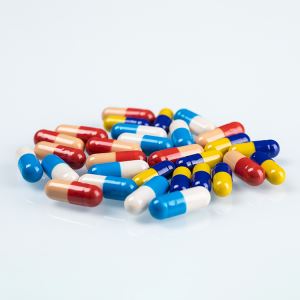

Hey there! As a supplier of empty edible capsules, I often get asked about the difference between hard and soft empty edible capsules. So, I thought I'd write this blog to clear things up and give you all the deets.
Let's start with the basics. Hard empty edible capsules are, well, hard. They're made up of two parts - a cap and a body. These capsules are typically made from gelatin, which is a protein derived from animal collagen. But don't worry, there are also vegetarian and vegan options available, usually made from materials like hydroxypropyl methylcellulose (HPMC).
On the other hand, soft empty edible capsules are flexible and have a one - piece design. They're also commonly made from gelatin, but they contain a plasticizer like glycerin or sorbitol, which gives them that soft and pliable texture.
Appearance and Structure
The most obvious difference between the two is their appearance. Hard capsules are rigid and come in a variety of sizes, from tiny ones for home - made supplements to larger ones for industrial use. You can check out our Large Empty Pill Capsule range for more options. They're usually clear or can be colored. And speaking of color, we have a great selection of Colored Gelatin Capsule that can make your product stand out on the shelves.
Soft capsules, however, are more oval - shaped and have a smooth, shiny surface. They look more like little jelly beans and are often used for products that need to be protected from air and light.


Filling and Usage
When it comes to filling, hard capsules are super versatile. You can fill them with powders, granules, or even pellets. This makes them a popular choice for a wide range of products, from vitamins and supplements to herbal remedies. You can easily find Gelatin Pill Capsules for these types of applications.
Soft capsules, on the other hand, are mainly used for filling with liquids, semi - solids, or oil - based substances. This is because their one - piece structure can effectively seal in these types of materials. For example, fish oil supplements are often packed in soft capsules to prevent the oil from oxidizing.
Dissolution and Absorption
Another important difference is how they dissolve in the body. Hard capsules usually dissolve quickly in the stomach, releasing their contents for absorption. The rate of dissolution can be adjusted by changing the capsule's material or coating.
Soft capsules, due to their thicker and more flexible shell, may take a bit longer to dissolve. But once they do, the liquid or semi - solid contents are often absorbed more quickly and efficiently, especially for fat - soluble substances.
Manufacturing Process
The manufacturing processes for hard and soft capsules are also quite different. Hard capsules are made by dipping pins into a gelatin solution, allowing the gelatin to dry on the pins, and then cutting and separating the cap and body parts.
Soft capsules are made using a process called rotary die encapsulation. In this process, two continuous strips of gelatin are fed into a machine, and the filling material is injected between the strips, which are then sealed together to form the capsules.
Shelf Life and Storage
Hard capsules have a relatively long shelf life if stored properly. They should be kept in a cool, dry place away from direct sunlight and moisture. Soft capsules, because of their higher moisture content and the nature of their fillings, may have a shorter shelf life and require more careful storage. They are more sensitive to temperature and humidity changes.
Cost
In terms of cost, hard capsules are generally less expensive to produce. This is because the manufacturing process is simpler and the materials used are more common. Soft capsules, with their more complex manufacturing process and the need for special fillings, can be a bit pricier.
So, which one should you choose? It really depends on your product. If you're dealing with powders or granules, hard capsules are a great option. But if you have liquid or oil - based products, soft capsules are the way to go.
As a supplier, I've seen firsthand how these different types of capsules can impact a product's success. Whether you're a small - scale producer or a large pharmaceutical company, we have the right empty edible capsules for you.
If you're interested in learning more about our products or have any questions about which type of capsule is best for your product, don't hesitate to reach out. We're here to help you make the right choice and get your product to market in the best possible way. Contact us to start a procurement discussion and find the perfect empty edible capsules for your needs.
References
- Pharmaceutical Capsules: Technology, Development, and Production by J. T. Carstensen
- Handbook of Pharmaceutical Excipients by Raymond C. Rowe, Paul J. Sheskey, and Marian E. Quinn