

Hey there! As a supplier of empty capsules, I often get asked about how to measure the right amount of powder for an empty capsule. It's a crucial step, whether you're making your own supplements at home or running a small-scale production. In this blog, I'll share some tips and tricks to help you get it just right.
Understanding Capsule Sizes
First things first, let's talk about capsule sizes. Empty capsules come in a variety of sizes, from tiny ones to large ones. Each size has a different capacity, which means it can hold a different amount of powder. The most common sizes are 000, 00, 0, 1, 2, 3, 4, and 5, with 000 being the largest and 5 being the smallest.
If you're not sure which size to use, it depends on what you're filling the capsules with. For example, if you're using a powder that's very light and fluffy, you might need a larger capsule to hold enough of it. On the other hand, if the powder is dense, you can use a smaller capsule. You can check out Large Gelatin Capsules for more options if you need bigger capsules.
Tools for Measuring Powder
Now that you know about capsule sizes, let's talk about the tools you'll need to measure the powder. There are a few different options, and which one you choose depends on how precise you need to be and how many capsules you're making.
Spoons
The simplest tool is a spoon. You can use a regular kitchen spoon, but keep in mind that it won't give you very precise measurements. If you're just making a few capsules for personal use, a spoon might be okay. Just scoop up the powder and try to level it off as best you can.
Measuring Scoops
Measuring scoops are a bit more precise than regular spoons. You can find them at most health food stores or online. They come in different sizes, so you can choose one that matches the amount of powder you need for your capsules. This is a good option if you're making a moderate number of capsules.
Digital Scales
For the most precise measurements, a digital scale is the way to go. You can weigh the powder to make sure you're getting the exact amount you need for each capsule. This is especially important if you're making capsules for medical or dietary purposes, where the dosage needs to be accurate. Place a small container on the scale, zero it out, and then add the powder until you reach the desired weight.
Calculating the Right Amount of Powder
So, how do you figure out how much powder to put in each capsule? It depends on a few factors, like the density of the powder and the size of the capsule.
Density of the Powder
The density of the powder is how much it weighs per unit of volume. Some powders are very light and fluffy, while others are dense. For example, a powder made from herbs might be less dense than a powder made from minerals. You can do a little experiment to figure out the density of your powder. Weigh a known volume of the powder (like a teaspoon) on a scale. Then, you can use this information to calculate how much powder you need for each capsule.
Capsule Capacity
As I mentioned earlier, each capsule size has a different capacity. You can find charts online that tell you the approximate capacity of each size of capsule in milliliters or milligrams. For example, a size 0 capsule can hold about 500 milligrams of powder on average, but this can vary depending on the powder's density.
Let's say you have a powder with a density of 0.5 grams per milliliter, and you're using a size 0 capsule with a capacity of 0.68 milliliters. To calculate the amount of powder you need, you multiply the density by the capacity: 0.5 grams/ml x 0.68 ml = 0.34 grams or 340 milligrams. So, you'd want to put about 340 milligrams of this powder in each size 0 capsule.
Filling the Capsules
Once you've measured the right amount of powder, it's time to fill the capsules. There are a few different methods you can use.
Manual Filling
If you're only making a few capsules, you can fill them manually. Open the capsule by pulling the two halves apart. Then, use your measuring tool to carefully add the powder to the bottom half of the capsule. Once it's filled, place the top half of the capsule over the bottom half and press them together gently until they snap shut.
Capsule Filling Machines
For larger quantities, a capsule filling machine is a great investment. There are different types of machines available, from manual ones that are suitable for small-scale production to automatic ones for industrial use. These machines can make the filling process much faster and more efficient. You simply pour the powder into the machine, and it fills the capsules for you.
Troubleshooting
Sometimes, things don't go as planned when filling capsules. Here are some common problems and how to fix them.
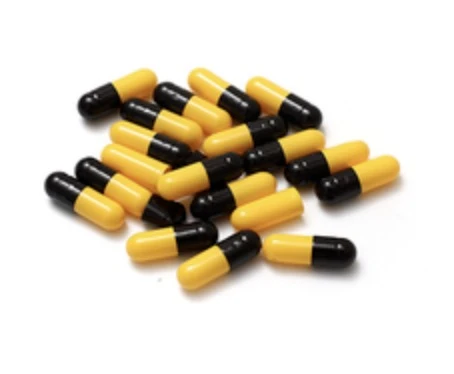

Capsules Don't Close Properly
If the capsules don't close properly, it could be because there's too much powder in them. Try removing a little bit of powder and then closing the capsule again. It could also be that the capsules are damaged or not of good quality. You can check out Empty Edible Capsule for high-quality capsules that are more likely to close properly.
Powder Spills
If powder spills out when you're filling the capsules, it could be because you're using too big of a measuring tool or not being careful enough. Try using a smaller tool or being more precise when adding the powder. You can also place a piece of paper or a tray under the capsules to catch any spills.
Quality Control
After you've filled the capsules, it's a good idea to do some quality control. Check each capsule to make sure it's filled properly and closed tightly. You can also weigh a few capsules to make sure they're all within the desired weight range. If you find any capsules that are underfilled or overfilled, you can adjust the amount of powder you're using for the remaining capsules.
Conclusion
Measuring the right amount of powder for an empty capsule might seem a bit tricky at first, but with the right tools and a little practice, you'll get the hang of it. Whether you're making capsules for personal use or for a business, it's important to get the dosage right to ensure the effectiveness and safety of the product.
If you're interested in purchasing high-quality empty capsules for your needs, we're here to help. We offer a wide range of Gelatin Capsule Coles and other types of empty capsules. Feel free to reach out to us to discuss your requirements and start a procurement conversation. We look forward to working with you!
References
- General knowledge about capsule sizes and powder measurements from industry experience.
- Information on capsule capacities from common capsule manufacturing resources.