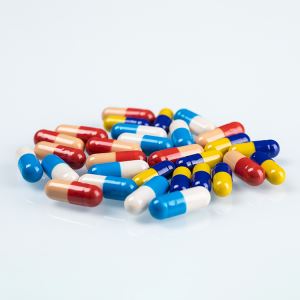

As a supplier of empty edible capsules, I've encountered numerous inquiries regarding the even distribution of filled substances within these capsules. Ensuring an even distribution is crucial for maintaining the quality, efficacy, and consistency of the final product. In this blog post, I'll share some insights and strategies to help you achieve this goal.
Understanding the Basics of Empty Edible Capsules
Before delving into the distribution process, it's essential to understand the types of empty edible capsules available. There are primarily two types: Hard Capsule and Empty pill capsule. Hard capsules are made up of two parts, a body and a cap, and are commonly used for dry powders, granules, or pellets. On the other hand, soft capsules are a one-piece, hermetically sealed shell typically used for liquids, suspensions, or semi-solids. Gelatin Pill Capsule is a popular choice due to its excellent solubility, biocompatibility, and versatility.

Factors Affecting Substance Distribution
Several factors can influence the even distribution of the filled substance in empty edible capsules. Understanding these factors is the first step in achieving a consistent fill.
1. Particle Size and Shape
The particle size and shape of the substance being filled play a significant role in its distribution. Irregularly shaped particles or particles with a wide range of sizes can lead to uneven packing within the capsule. For example, large particles may settle at the bottom, while smaller particles may accumulate at the top. To mitigate this issue, it's advisable to use a substance with a narrow particle size distribution and regular shape. This can be achieved through processes such as sieving or milling.
2. Density of the Substance
The density of the substance affects its flowability and packing characteristics. A substance with a high density may settle more quickly, leading to uneven distribution. Conversely, a low-density substance may be more prone to air entrapment, which can also cause inconsistencies. It's important to select a substance with an appropriate density for the capsule filling process. If necessary, density modifiers can be added to adjust the density of the substance.
3. Capsule Design and Size
The design and size of the capsule can also impact the distribution of the filled substance. Capsules with a larger diameter may allow for more even distribution, as there is more space for the substance to spread out. Additionally, the shape of the capsule can affect the flow of the substance during filling. For example, capsules with a tapered end may facilitate better filling and distribution compared to those with a straight edge.

4. Filling Equipment and Process
The type of filling equipment and the filling process used are critical factors in ensuring even distribution. There are various types of capsule filling machines available, including manual, semi-automatic, and fully automatic machines. Each type has its own advantages and limitations, and the choice of machine depends on the production volume, the nature of the substance, and the desired level of precision.
Strategies for Ensuring Even Distribution
Now that we've identified the factors that can affect substance distribution, let's explore some strategies to ensure an even fill.

1. Pre - blending the Substance
Pre - blending the substance before filling is an effective way to ensure uniformity. This involves mixing all the ingredients thoroughly to create a homogeneous mixture. A high - shear mixer or a tumble blender can be used for this purpose. By pre - blending, you can minimize the differences in particle size, density, and composition, which will result in a more even distribution within the capsule.
2. Using a Proper Filling Technique
The filling technique used can significantly impact the distribution of the substance. For dry powders, the volumetric filling method is commonly used. This method involves measuring a specific volume of the substance and depositing it into the capsule. To ensure accuracy, it's important to calibrate the filling equipment regularly.
For liquids or semi - solids, the displacement filling method is often employed. This method uses a piston or a syringe to displace a precise amount of the substance into the capsule. Care must be taken to prevent air bubbles from being trapped during the filling process, as they can cause uneven distribution.
3. Vibration and Tamping
Vibration and tamping can be used to improve the packing density and distribution of the substance within the capsule. Vibrating the capsule during filling helps to settle the particles and eliminate air gaps. Tamping, on the other hand, involves applying pressure to the filled substance to compress it and ensure a more uniform distribution. However, it's important to use the right amount of vibration and tamping, as excessive force can damage the capsule or cause the substance to become compacted unevenly.
4. Quality Control
Implementing a rigorous quality control program is essential to ensure the even distribution of the filled substance. This includes conducting regular inspections of the filled capsules to check for any visible signs of uneven distribution, such as clumping or segregation. In addition, analytical techniques such as content uniformity testing can be used to quantify the distribution of the active ingredients within the capsules.
Conclusion
Ensuring the even distribution of the filled substance in empty edible capsules is a complex process that requires careful consideration of various factors. By understanding the properties of the substance, the design of the capsule, and the filling equipment and process, you can take steps to achieve a consistent and high - quality fill.
As a supplier of empty edible capsules, I'm committed to providing you with the highest quality products and technical support. If you have any questions or need further assistance in ensuring the even distribution of your filled substances, please feel free to contact me for a procurement discussion.
References
- Pharmaceutical Dosage Forms: Tablets, Volume 1, 3rd Edition, edited by Herbert A. Lieberman, Leon Lachman, and Joseph B. Schwartz.
- Remington: The Science and Practice of Pharmacy, 22nd Edition, edited by Philip B. Troy.
- Handbook of Encapsulation and Controlled Release, edited by Patrick B. Deasy.