
Yo! I'm a supplier of medicine capsules, and I often get asked about how medicine capsules stack up against transdermal patches. So, I thought I'd break it down for you in this blog post.
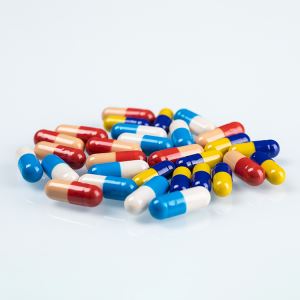
Let's start with medicine capsules. I mean, they've been around for ages, and for good reason. Capsules are super convenient. You just pop them in your mouth with a glass of water, and you're good to go. They come in all sorts of shapes, sizes, and colors. For example, we've got the Blue White Capsule, which looks really cool, and the Colored Pill Capsule that can be customized to stand out. There are also Semi transparent Capsules that give a bit of a unique look.
One of the big advantages of capsules is that they can protect the medicine inside. They can be made in a way that the medicine is released at the right time and place in the body. Some capsules are designed to dissolve in the stomach, while others are made to pass through the stomach and release the medicine in the intestines. This targeted release can make the medicine more effective and reduce side - effects.
Another plus is that capsules can hold different types of medicines, whether it's a powder, a liquid, or a gel. This flexibility means that a wide range of drugs can be formulated into capsule form. And let's not forget about the dosage accuracy. Capsules can be filled with very precise amounts of medicine, which is crucial for getting the right treatment.
Now, let's talk about transdermal patches. These are patches that you stick on your skin, and the medicine is absorbed through the skin into the bloodstream. One of the main benefits of transdermal patches is that they offer a steady and continuous release of medicine. You don't have to worry about taking pills at specific times throughout the day. It's like having a little medicine factory working on your skin 24/7.
Transdermal patches are also great for people who have trouble swallowing pills. Some folks just can't stand the feeling of a pill going down their throat, and patches are a perfect alternative for them. And since the medicine is absorbed through the skin, it bypasses the digestive system. This can be a big deal for drugs that might be broken down or inactivated by the stomach acid or the liver enzymes.


However, transdermal patches aren't without their drawbacks. For starters, not all medicines can be delivered through the skin. The skin is a pretty tough barrier, and only certain types of drugs with the right properties can pass through it effectively. Also, some people might have skin reactions to the patch. It could cause itching, redness, or a rash. And if the patch doesn't stick well, it might not deliver the medicine as it should.
In terms of cost, capsules are generally more cost - effective to produce. The manufacturing process for capsules is well - established and can be done on a large scale relatively easily. Transdermal patches, on the other hand, often require more complex technology and materials, which can drive up the cost.
When it comes to patient compliance, it's a bit of a mixed bag. Capsules are easy to take, but some patients might forget to take them on time. Transdermal patches solve the forgetting problem to some extent, but if the patch is uncomfortable or causes skin issues, patients might be less likely to keep using it.
Let's compare the two in terms of bioavailability. Bioavailability is how much of the medicine actually gets into the bloodstream and is available to do its job. Capsules can have high bioavailability, especially when they're designed correctly. But sometimes, the first - pass metabolism in the liver can reduce the amount of active medicine. Transdermal patches can avoid this first - pass effect, which means more of the medicine might reach the bloodstream in its active form.
The speed of action is also different. Capsules usually start working within a relatively short time, depending on how quickly they dissolve in the body. Transdermal patches, on the other hand, have a slower onset of action because the medicine has to be absorbed through the skin. So, if you need a quick fix, a capsule might be the better option.
In terms of storage, capsules are pretty easy. They can be stored at room temperature in a dry place. Transdermal patches might have more specific storage requirements, like keeping them away from heat or moisture, because these can affect the integrity of the patch and the medicine inside.
Now, which one is better? Well, it really depends on the situation. For acute conditions where a quick effect is needed, capsules are often the way to go. For chronic conditions that require a steady dose of medicine over a long period, transdermal patches could be a good choice.
As a medicine capsule supplier, I believe that capsules still have a huge place in the market. They're reliable, cost - effective, and can be used for a wide variety of drugs. But I also recognize the benefits of transdermal patches. Each has its own role to play in the world of medicine.
If you're in the market for high - quality medicine capsules, whether it's for a new drug development or to replace your current supplier, I'd love to have a chat with you. We can discuss your specific needs, and I'm confident that we can provide you with the best capsule solutions.
References
- Goodman, L. S., & Gilman, A. (Eds.). (2006). Goodman and Gilman's The Pharmacological Basis of Therapeutics. McGraw - Hill.
- Langer, R. (1990). New methods of drug delivery. Science, 249(4976), 1527 - 1533.
- Ritschel, W. A., & Kearns, G. L. (2008). A textbook of modern pharmaceutics. Informa Healthcare.