
How do hard gelatin capsules prevent drug - capsule interactions?
As a long - standing and reliable supplier of hard gelatin capsules, I've witnessed the critical role these capsules play in the pharmaceutical industry. One of the most significant challenges in drug formulation is preventing drug - capsule interactions, and in this blog, I'll delve into how hard gelatin capsules effectively address this concern.
Understanding the nature of drug - capsule interactions
Before we explore how hard gelatin capsules prevent these interactions, it's essential to understand what they are. Drug - capsule interactions can occur in several ways. Chemical reactions between the drug and the capsule material may lead to changes in the drug's stability, efficacy, or safety. For example, some drugs may react with certain substances in the capsule, causing degradation of the active pharmaceutical ingredient (API). Physical interactions can also take place, such as adsorption of the drug onto the capsule wall, which can affect the drug's release profile.
Composition of hard gelatin capsules
Hard gelatin capsules are primarily composed of gelatin, a protein obtained from the partial hydrolysis of collagen. Gelatin has unique properties that make it an ideal material for encapsulating drugs. It is a biocompatible and biodegradable polymer, which means it is well - tolerated by the human body and can be broken down naturally.
The gelatin used in hard capsules is typically derived from bovine or porcine sources. However, for those with specific dietary or religious requirements, we also offer Halal Empty Capsule. These halal capsules are made from gelatin that adheres to strict Islamic dietary laws, providing a suitable option for a wider range of consumers.
Barrier properties
One of the key ways hard gelatin capsules prevent drug - capsule interactions is through their excellent barrier properties. The gelatin shell forms a physical barrier between the drug and the external environment. It protects the drug from moisture, oxygen, and light, which are common factors that can trigger chemical reactions and degradation of the API.
In terms of moisture, the gelatin shell has a relatively low water permeability. This helps to maintain the optimal moisture content of the drug formulation inside the capsule. Many drugs are sensitive to moisture; for instance, hydrolytic reactions can occur when a drug comes into contact with water, leading to a decrease in its potency. By preventing moisture ingress, hard gelatin capsules preserve the stability of the drug.


Oxygen is another element that can react with drugs, especially those that are prone to oxidation. The gelatin shell acts as a barrier against oxygen, reducing the risk of oxidative degradation. This is particularly important for drugs containing antioxidants, vitamins, or other oxygen - sensitive compounds.
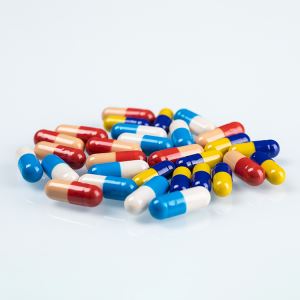
Light can also have a detrimental effect on drugs, causing photochemical reactions. Hard gelatin capsules can provide a certain degree of protection against light, especially if they are colored. We offer Empty Colored Capsule, which not only enhance the visual appeal of the product but also offer improved light protection for light - sensitive drugs.
Chemical inertness
Gelatin is chemically inert under most conditions, which means it is less likely to react with the drug inside the capsule. The amino acid composition of gelatin and its low reactivity prevent it from participating in chemical reactions with a wide range of drugs. This chemical compatibility is crucial for maintaining the integrity of the API.
For example, acidic or basic drugs can sometimes react with the container material. However, hard gelatin capsules are stable across a relatively wide pH range. They can withstand the pH of different drug formulations without undergoing significant chemical changes, ensuring that the drug remains unchanged until it is released in the body.
Surface properties
The surface of hard gelatin capsules also plays a role in preventing drug - capsule interactions. The smooth and non - porous surface of the gelatin shell reduces the likelihood of drug adsorption. Unlike some other materials that may have a high affinity for drugs, the gelatin surface does not readily adsorb the API.
This is important because drug adsorption can lead to a decrease in the bioavailability of the drug. When a significant amount of the drug is adsorbed onto the capsule wall, less of it is available for absorption in the body. The non - adsorptive nature of hard gelatin capsules helps to ensure that the drug is released in a controlled and reproducible manner, maximizing its therapeutic effect.
Compatibility with excipients
In addition to the drug itself, drug formulations often contain excipients, which are substances added to the API for various purposes such as facilitating manufacturing, improving stability, or enhancing dissolution. Hard gelatin capsules are compatible with a wide range of excipients.
Excipients can also interact with the capsule material, and potential incompatibilities can lead to problems such as changes in the capsule's physical properties or degradation of the excipients themselves. Gelatin capsules have been shown to be compatible with common excipients like fillers, binders, lubricants, and disintegrants. This compatibility allows for the formulation of complex drug products without the risk of adverse interactions between the excipients and the capsule.
Quality control measures
As a hard gelatin capsule supplier, we implement strict quality control measures to ensure that our capsules effectively prevent drug - capsule interactions. We carefully select the raw materials for gelatin production, ensuring that they meet high - quality standards. The manufacturing process is also tightly controlled to produce capsules with consistent properties.
We conduct various tests on our capsules, including chemical analysis, mechanical testing, and solubility testing. These tests help us to verify the purity, strength, and dissolution characteristics of the capsules. By maintaining high - quality capsules, we provide our customers with a reliable product that can effectively protect their drugs from unwanted interactions.
Different sizes for different needs
We offer a variety of capsule sizes to accommodate different drug dosages. One of our popular options is the 00 Gelatin Capsules. Different capsule sizes not only allow for precise dosing of the drug but also affect the drug - capsule interaction. Depending on the size of the capsule, the surface - to - volume ratio of the drug inside the capsule can change, which in turn can influence factors such as drug release kinetics and the potential for interactions.
Conclusion
In conclusion, hard gelatin capsules are an excellent choice for preventing drug - capsule interactions. Their barrier properties, chemical inertness, surface properties, compatibility with excipients, and the strict quality control measures in place all contribute to their effectiveness. Whether you are formulating a new drug product or looking to improve the stability of an existing one, our hard gelatin capsules can provide the solution you need.
If you are in the pharmaceutical industry and are interested in exploring our range of hard gelatin capsules, we encourage you to contact us for a detailed discussion. Our team of experts is ready to assist you in selecting the most suitable capsules for your specific requirements. We are committed to providing high - quality products and excellent customer service. Let's work together to ensure the success of your drug formulations.
References
- Banga, A. K. (Ed.). (2005). Basic concepts in pharmaceutical sciences. CRC Press.
- Chiou, W. L., & Riegelman, S. (1971). Theoretical analysis of rate of release of solid drugs dispersed in solid matrices. Journal of Pharmaceutical Sciences, 60(9), 1281 - 1302.
- Gibson, M. A., & Schwartz, J. B. (1999). Pharmaceutical dosage forms: Tablets. Informa Healthcare.