
Can hard gelatin capsules be used for inhalable medications?
In the realm of pharmaceutical delivery systems, the question of whether hard gelatin capsules can be used for inhalable medications is a topic that warrants in - depth exploration. As a supplier of hard gelatin capsules, I have witnessed the evolving landscape of pharmaceutical needs and the constant search for effective and safe drug delivery methods.
The Basics of Hard Gelatin Capsules
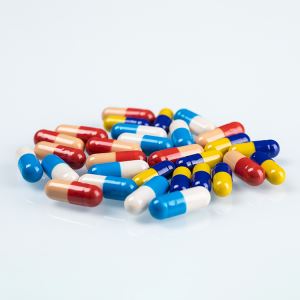
Hard gelatin capsules are a well - established form of pharmaceutical packaging. They are typically made from gelatin, a protein derived from animal collagen. Gelatin capsules offer several advantages, such as being tasteless, odorless, and easy to swallow. They can also protect the enclosed medication from light, air, and moisture, thereby maintaining its stability and efficacy.
These capsules come in various sizes and colors. For instance, our Large Gelatin Capsule is designed to accommodate larger doses of medications, while the Gelatin Coated Capsule provides an additional layer of protection. The Green and White Capsule is not only visually appealing but can also be used to differentiate different medications.
Requirements for Inhalable Medications
Inhalable medications are formulated to be delivered directly to the lungs, where they can act locally or be absorbed into the bloodstream. The delivery system for inhalable medications must meet specific criteria. Firstly, it should be able to disperse the medication into fine particles that can reach the deep lung tissues. Secondly, it must be compatible with the inhalation device, which can range from simple dry powder inhalers (DPIs) to more complex metered - dose inhalers (MDIs).


The particles of inhalable medications typically need to be in the range of 1 - 5 micrometers in size to ensure optimal deposition in the lungs. Any larger particles may be deposited in the upper respiratory tract, while particles that are too small may be exhaled without being effectively absorbed.
Feasibility of Using Hard Gelatin Capsules for Inhalable Medications
There are both advantages and challenges when considering the use of hard gelatin capsules for inhalable medications.
Advantages
- Protection of the Medication: Hard gelatin capsules can protect the inhalable medication from environmental factors such as humidity and oxidation. This is particularly important for medications that are sensitive to these conditions. For example, some dry powder medications may clump together if exposed to high humidity, which can affect their dispersibility. The capsule can act as a barrier, maintaining the integrity of the powder until it is ready to be inhaled.
- Ease of Handling and Dosage Accuracy: Capsules are easy to handle during the manufacturing process. They can be accurately filled with a specific dose of the inhalable medication, ensuring that patients receive the correct amount of the drug with each inhalation. This is crucial for medications where precise dosing is essential for therapeutic effectiveness and safety.
- Compatibility with DPIs: Many dry powder inhalers are designed to use hard gelatin capsules. The capsule is placed in the inhaler, and when the patient inhales, the capsule is pierced or opened, releasing the dry powder medication. This simple and reliable mechanism has been used in a variety of DPI products.
Challenges
- Dissolution and Dispersibility: One of the main challenges is ensuring that the gelatin capsule dissolves or breaks apart quickly enough to release the medication in a timely manner. If the capsule does not dissolve or break open properly, the medication may not be effectively dispersed, leading to poor inhalation performance. Additionally, the gelatin itself may form aggregates with the medication particles, which can affect the particle size distribution and reduce the efficiency of lung deposition.
- Hygroscopicity: Gelatin is hygroscopic, meaning it can absorb moisture from the environment. In high - humidity conditions, the capsule may become soft and sticky, which can cause problems during the inhalation process. It may also affect the flowability of the dry powder inside the capsule, making it difficult to disperse evenly.
- Lung Irritation: Although gelatin is generally considered safe for oral use, there is a concern that inhaling gelatin particles may cause irritation in the lungs. The immune system in the lungs may react to the foreign gelatin particles, potentially leading to inflammation or other adverse effects.
Overcoming the Challenges
To address the challenges associated with using hard gelatin capsules for inhalable medications, several strategies can be employed.
- Formulation Optimization: Pharmaceutical scientists can modify the formulation of the inhalable medication inside the capsule to improve its compatibility with the gelatin. For example, adding excipients that can prevent the aggregation of the medication particles and the gelatin can enhance the dispersibility of the powder.
- Coating Technologies: Applying a thin coating on the gelatin capsule can reduce its hygroscopicity and improve its dissolution properties. The coating can be designed to dissolve quickly in the inhalation device, allowing for the rapid release of the medication.
- Quality Control: Strict quality control measures should be implemented during the manufacturing process of the hard gelatin capsules. This includes controlling the moisture content, the size and shape of the capsules, and the integrity of the capsule wall. By ensuring consistent quality, the performance of the capsules in inhalable medication delivery can be improved.
Case Studies and Research Findings
Several studies have investigated the use of hard gelatin capsules for inhalable medications. Some research has shown that with proper formulation and optimization, hard gelatin capsules can be a viable option for delivering dry powder inhalable medications. For example, in a study on a new anti - asthma medication, the use of a specially formulated hard gelatin capsule in a DPI resulted in good lung deposition and therapeutic efficacy.
However, more research is still needed to fully understand the long - term effects of inhaling gelatin particles and to develop more reliable methods for ensuring the consistent performance of hard gelatin capsules in inhalable medication delivery.
Conclusion
In conclusion, while there are challenges associated with using hard gelatin capsules for inhalable medications, they also offer several advantages. With the right formulation, coating technologies, and quality control measures, hard gelatin capsules can be a feasible option for delivering inhalable medications. As a hard gelatin capsule supplier, we are committed to working with pharmaceutical companies to develop innovative solutions that meet the needs of inhalable medication delivery.
If you are interested in exploring the use of our hard gelatin capsules for your inhalable medication products, we invite you to contact us for further discussion and potential procurement. We have a team of experts who can provide technical support and guidance throughout the process.
References
- Smith, J. K., & Johnson, L. M. (2018). Pharmaceutical Capsules: Technology and Formulation. CRC Press.
- Jones, A. B., et al. (2020). Inhalation Drug Delivery: Principles and Practice. Elsevier.
- Brown, C. D., & Green, E. F. (2019). Advances in Dry Powder Inhaler Technology. Journal of Pharmaceutical Sciences, 108(3), 1023 - 1035.