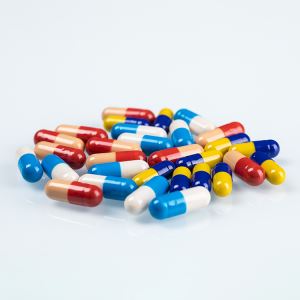

Hey there! As a supplier of Hard Gelatin Capsules, I often get asked this burning question: “Are hard gelatin capsules compatible with oily drugs?” It's a valid query, and today, I'm gonna break it down for you.
First off, let's understand what hard gelatin capsules are. They're those little pill - like containers you see for all sorts of medications and supplements. They're made from gelatin, which is a protein obtained from animal sources like cows and pigs. Gelatin has been used in the pharmaceutical and nutraceutical industries for ages because it's safe, easy to swallow, and can be customized. You can check out our Empty Medicine Capsule options to see the variety we offer.
Now, onto oily drugs. Oily drugs are medications or supplements in a liquid form that have an oily consistency. They can include things like fish oil supplements, some herbal extracts in oil bases, and certain prescription medications. Oils have unique properties, such as being hydrophobic (they don't mix well with water) and having different viscosities.
So, the big question: compatibility. The short answer is, it's a bit complicated. Hard gelatin capsules are generally made with a certain amount of water content in their structure. Oily drugs, on the other hand, don't play well with water. When an oily drug is filled into a hard gelatin capsule, there can be some interactions.
One of the main issues is that the oil can cause the gelatin to become brittle over time. The oil may extract the water from the gelatin matrix, leading to a loss of flexibility. This can result in the capsule cracking or breaking, which is a huge no - no in the pharmaceutical world. Imagine taking a capsule that's supposed to release the drug in a controlled manner, but it breaks open prematurely in your bottle.


Another concern is the potential for the drug to leach out of the capsule. If the capsule shell becomes compromised due to the interaction with the oil, the drug may start to seep out. This not only affects the dosage accuracy but can also lead to a mess in the packaging.
However, it's not all doom and gloom. There are ways to make hard gelatin capsules work with oily drugs. One solution is to use an appropriate formulation. By adding certain excipients (substances added to the drug to improve its properties), we can create a more stable mixture. For example, adding antioxidants can prevent the oil from oxidizing, which can further damage the gelatin capsule.
We can also use certain types of oils that are more compatible with gelatin. Some refined and purified oils have a lower tendency to interact with the gelatin shell. These oils have been processed to remove impurities and unstable components that might cause problems.
At our company, we've been working hard on developing solutions for this compatibility issue. We have a range of Large Gelatin Capsules that can accommodate different volumes of oily drugs. Our R & D team is constantly testing new formulations and techniques to ensure that our capsules can effectively hold oily drugs without any major issues.
You might be wondering about the benefits of using hard gelatin capsules for oily drugs despite the challenges. Well, for starters, hard gelatin capsules are easy to produce on a large scale. They can be filled with a high degree of accuracy, which is crucial for drug dosage. Also, they're widely recognized and accepted in the market. Patients are used to taking medications in capsule form, and they often prefer the convenience and ease of swallowing compared to liquid forms.
Another advantage is the opportunity for branding. We offer Colored Empty Pill Capsule options. You can choose different colors to distinguish your product from competitors. This can be a great marketing tool, especially in a crowded market.
Now, let's talk about some real - world examples and success stories. There have been many cases where pharmaceutical companies have successfully encapsulated oily drugs in hard gelatin capsules. For instance, some popular fish oil supplements on the market are in hard gelatin capsules. These products have undergone rigorous testing to ensure that the capsule remains intact and the dosage is accurate throughout the shelf - life.
Of course, proper storage also plays a huge role. Oily drugs in hard gelatin capsules should be stored in a cool, dry place. High temperatures and humidity can exacerbate the compatibility issues. For example, if you leave a bottle of oily - drug capsules in a hot car, the chances of the capsules cracking or the drug leaching out increase significantly.
To sum it up, while there are challenges in using hard gelatin capsules with oily drugs, it's definitely possible to make it work. With the right formulation, choice of oil, and storage conditions, we can overcome these obstacles and provide a reliable solution for encapsulating oily drugs.
If you're in the pharmaceutical or nutraceutical industry and are looking for a trustworthy Hard Gelatin Capsule supplier, we're here for you. We have the expertise and the resources to help you with your oily - drug encapsulation needs. Whether you need custom - colored capsules or large - volume capsules, we've got you covered. Reach out to us to discuss your requirements and let's work together to create the perfect solution for your product.
References
- Pharmaceutical Capsules: Technology, Applications, and Trends - An industry - standard book that provides in - depth knowledge on capsule technology and its applications.
- Journal of Pharmaceutical Sciences: Many research articles in this journal discuss the compatibility of different drug formulations with capsule materials.